

Somatic Therapy in Ventura California
When self-awareness isn’t enough to break old patterns
 You’ve put in real work to understand your trauma, but the old patterns continue to resurface when you least expect them.
You’ve mapped out your patterns and even made some major life changes inspired by the insights you’ve gathered. And yet, when stress arises or a relationship becomes difficult, you find yourself slipping back into familiar protective instincts.
You may know why you people-please, struggle to trust yourself, or feel responsible for everyone else’s well-being. Yet when those patterns are activated, it can still be difficult to respond in the way you want for yourself.
 You know what relief feels like, but making lasting changes still takes so much effort.
You’ve experienced moments when you feel grounded, confident, and more like yourself. You know it’s possible to respond differently, trust your instincts, and feel more at ease in your relationships. But when stress hits, old patterns creep back in.
You’re tired of feeling like you have to work so hard just to keep yourself from slipping back into old patterns.
You’re frustrated that you understand so much about yourself, yet still struggle to make the changes you long for.
You may even wonder whether lasting change is possible for you, or whether some part of you will always be stuck responding to life through the lens of your past.
You’re ready for an approach that goes beyond understanding your patterns.
This is where Somatic Therapy in Ventura, California can offer a new path forward.
What is Somatic Therapy?
 A Pathway to Healing Trauma Through the Body
Somatic therapy is a body-focused therapeutic approach to address the impact trauma has on your mind-body-emotional system through body-awareness exercises and applied neuroscience.
By slowing down and tracking how your body responds to your thoughts, memories, and emotions, we begin to map the rhythms and patterns of your internal experience. This allows us to take a bottom-up approach- working with the body to restore a sense of safety, connection, and presence from the inside out.
When we feel safe, our nervous system becomes flexible and open. We can rest, digest, think clearly, create, connect, and respond rather than react.
Under typical stress, we can ride the waves of adversity and eventually return to a grounded state on our own.
But trauma overwhelms the system. It’s what happens when the intensity or duration of an experience exceeds our capacity to process it. The unintegrated activation doesn’t disappear- it lives on in the body, shaping how we feel, behave, and relate long after the event is over.
Healing requires returning to the unfinished physiological process that was interrupted during the traumatic experience and provide care and support in a way you didn’t receive in the moment it happened.
Healing Trauma Requires More Than Talk Therapy
If we only address trauma through thoughts, we run into limitations. You can think positively, understand everything logically, and still feel hijacked by anxiety, shutdown, or old relational patterns- because your nervous system is still stuck in survival mode.
And yet, a regulated nervous system on its own isn’t enough either. True healing integrates body, mind, and emotional layers, and requires you to create a new sense of resiliency, meaning, identity, and worldview.
I offer an integrative approach that tends to these layers: somatic, cognitive, emotional, and spiritual. This comprehensive framework has proven to be transformative in my work with clients who resonate with this depth-oriented way of working and want to heal at the root of their pain.
Hi, I’m Frank.
I work with adults struggling to turn insight into embodied change.
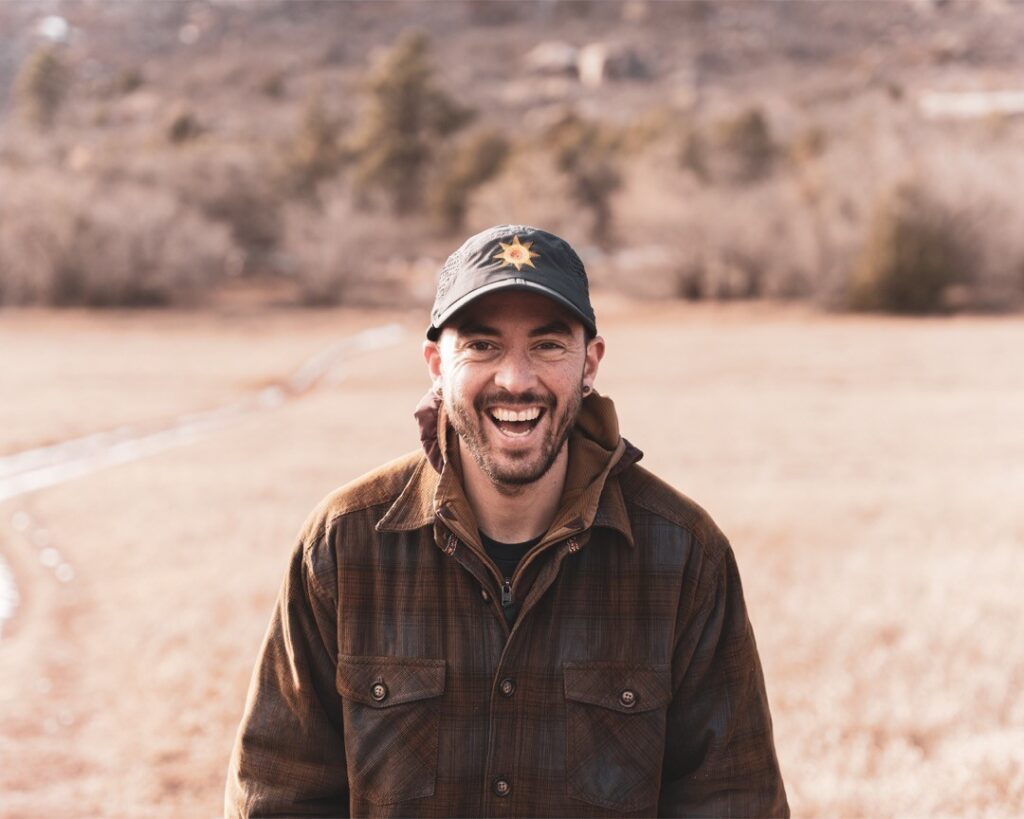 I’ve been there… In my early twenties, I experienced a mental health crisis that significantly disrupted my ability to function. Despite understanding where my pain came from and how I wanted to change, I continued to experience the same outcomes in my relationships, work, and art- especially in the face of adversity.
Things changed after I found rock bottom and I was forced to reassess my approach. It was at this point that I began integrating my cognitive and mental work with somatic and depth psychology tools.
Together, these approaches contributed to a profound transformation in my experience of life. I became better able to recognize old patterns without automatically acting them out, stay connected to myself when life became difficult, and feel more trusting in myself. Learn more about my approach here.